Commercial Low Slope Roofing in Fort Worth, TX
Flat and low-slope commercial roofing presents unique engineering challenges that don't apply to pitched residential systems. Standing water, thermal cycling, drainage adequacy, and rooftop mechanical equipment all create failure modes that require material specification and installation practices specifically designed for these conditions.
City Roofing Company installs and maintains commercial low-slope roofing systems across Fort Worth and Tarrant County - from single-tenant retail buildings to large warehouse and industrial facilities.
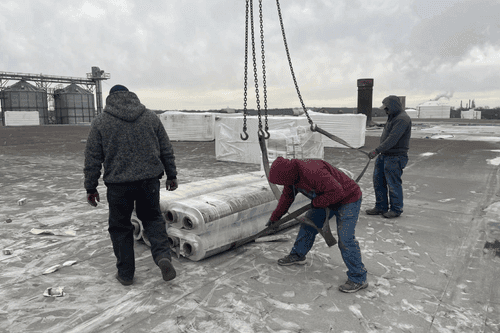
TPO Single-Ply Membrane
Our primary recommendation for most Fort Worth commercial flat roofs - reflective, heat-welded seams, 20-30 year lifespan.
EPDM Rubber Roofing
Durable rubber membrane suitable for specific applications - particularly in shaded areas where TPO's reflectivity advantage is reduced.
Modified Bitumen
Multi-ply system with excellent puncture and tear resistance - common on high-traffic rooftop areas and buildings with complex geometry.
Built-Up Roofing (BUR)
Traditional multi-layer system combining asphalt and reinforcing fabric - proven performance in commercial applications for over a century.
Drainage Engineering
Drain sizing, placement, and tapered insulation to ensure adequate slope and prevent ponding on flat commercial roofs.
Roof Replacement Over Existing Systems
In qualifying conditions, recover installation over existing substrates to reduce cost and disposal requirements.
Low Slope Roofing Challenges in Fort Worth's Climate
Fort Worth's summer heat creates thermal expansion and contraction cycles in flat roofing membranes that stress seams, fastener points, and perimeter flashing continuously. A membrane that's properly fastened and seamed during cooler installation conditions may show fatigue within a few years if the system wasn't designed for this thermal cycling. We specify materials and installation methods with Texas temperature ranges explicitly in mind.
Drainage is the single most critical factor in flat roof longevity. A roof that ponds consistently loses years of service life - ponding water accelerates UV degradation, creates sustained hydrostatic pressure on seams, and provides the conditions for biological growth that further compromise membrane integrity. We assess drainage adequacy as a non-negotiable part of every commercial low-slope project.
Service Areas in Tarrant County
Frequently Asked Questions
The most common systems for Fort Worth commercial low-slope applications are: TPO single-ply membrane (our primary recommendation), EPDM rubber membrane, modified bitumen, built-up roofing (BUR), and standing seam metal on slopes above 1:12. System selection depends on slope, drainage adequacy, building use, and budget.
Building codes generally require a minimum slope of 1/4 inch per foot (1:48) for low-slope commercial roofs to ensure adequate drainage. Roofs below this threshold are considered 'dead flat' and typically experience chronic ponding issues that significantly shorten membrane lifespan. We assess drainage as part of every commercial roofing project.
Proper drainage engineering is the first line of defense - adequate drain number, size, and placement for the roof area and expected rainfall intensity. Tapered insulation systems can add slope to existing flat roofs. For existing systems, ensuring drains are clear and functioning is critical - clogged drains turn minor rainfall into significant ponding within minutes.
Fort Worth Commercial Low Slope Roofing - Get a Free Assessment
Fort Worth's trusted roofing experts since 1964. No pressure, no obligation - just an honest assessment from a family-owned team that treats you right.
Mon-Fri 8 AM-5 PM · Saturday by appointment · 100% satisfaction guaranteed